
Capabilities · Mechanical & HVAC
Industrial and federal mechanical contractor in St. Louis.
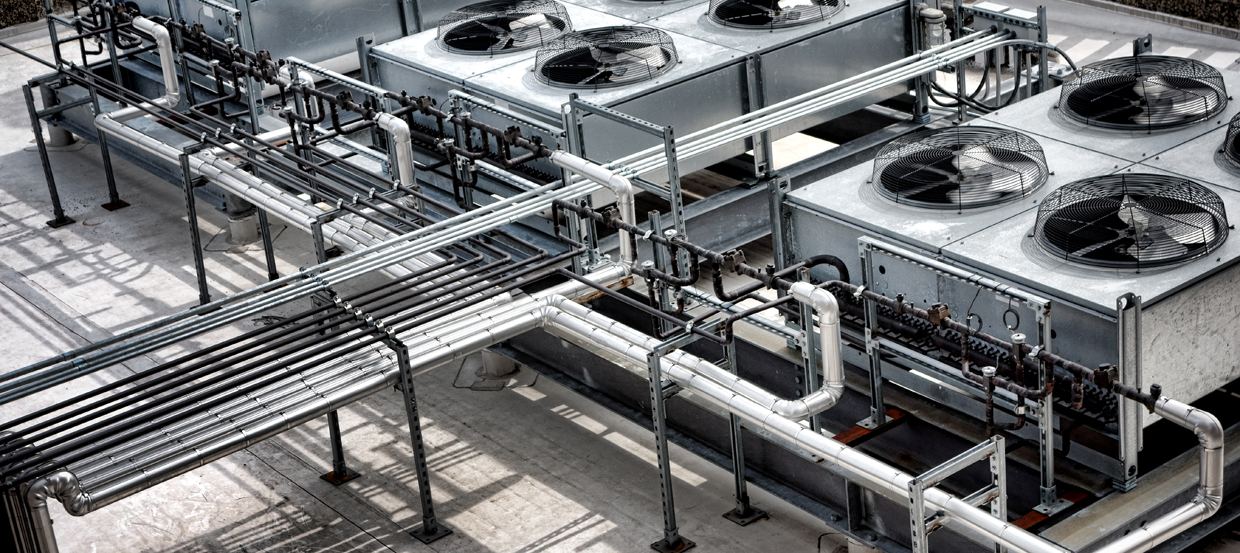
Rooftop units, air handlers, boilers and fuel-fired equipment for labs, reserve centers and plants that cannot afford downtime.
What we do
SIS's mechanical division is built on tradesmen who take pride in their work. They know our name, and theirs, is on every piece of equipment and control they touch.
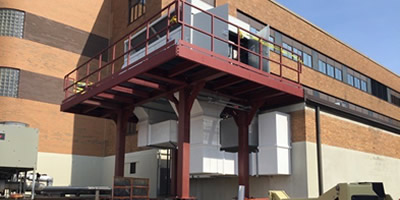
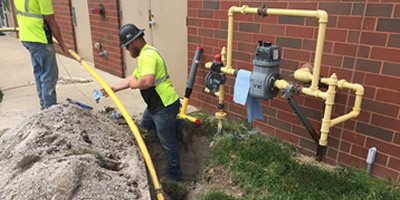
We replaced a research lab's rooftop unit on an engineered steel platform for USDA in Peoria, and converted air handlers, heating units, boilers, water heaters and kitchen equipment from propane to natural gas across seven buildings at the Weldon Spring Army Reserve Center.
Services
- Rooftop unit replacement
- Air handlers and heating units
- Boilers and water heaters
- Fuel conversions and burner adjustments
- Ductwork and air distribution
- Structural platforms and equipment supports
- Controls coordination
- Testing, adjusting and commissioning
Occupied facilities
Mechanical work in buildings that cannot shut down
Federal laboratories, reserve centers and administrative buildings rarely get to close while their mechanical systems are replaced. The work has to be phased around occupants, research schedules and weather, with temporary conditioning where it is needed and a firm date to return systems to service.
Our mechanical crews plan around those constraints. At USDA's National Center for Agricultural Utilization Research in Peoria, the Building 8 laboratory needed its environmental conditions back by a hard deadline. At the Weldon Spring Army Reserve Center, equipment conversions were scheduled for summer so buildings never lost heat.
Scope
Mechanical systems we install and replace
SIS installs, replaces and converts the equipment that heats, cools and ventilates federal and industrial buildings, and builds the structural supports, piping and controls connections around it.
- Packaged rooftop units and air handlers
- Boilers, unit heaters and water heaters
- Fuel conversions from propane or oil to natural gas
- Steel equipment platforms and dunnage
- Ductwork and air distribution
- Hydronic and steam piping
- Equipment testing, adjusting and balancing coordination
- Commissioning support and O&M documentation
How we deliver it
How a typical HVAC replacement runs
- Step 1
Survey existing conditions
We confirm structure, utilities, access and hazardous materials before design, because surprises cost the most once demolition starts.
- Step 2
Engineer the support
New equipment is often heavier or larger than what it replaces; we coordinate structural and geotechnical engineering for pads, platforms and footings.
- Step 3
Phase the outage
Demolition and setting are sequenced to keep the building operating, with crane picks and deliveries scheduled around occupants.
- Step 4
Start up and turn over
Equipment is started, tested and adjusted, then turned over with training, O&M manuals and as-built drawings.
Service areas
Where we perform mechanical work
Frequently asked questions
Does SIS do HVAC work in occupied federal buildings?
Yes. Our USDA Building 8 project replaced the HVAC serving an active research lab under a hard deadline to return it to service.
Can SIS convert equipment from propane to natural gas?
Yes. At the Weldon Spring Reserve Center we converted air handlers, heaters, boilers, water heaters and kitchen equipment in seven buildings.
Can SIS replace rooftop HVAC equipment on a government building?
Yes. SIS replaced the rooftop unit serving USDA's Building 8 laboratory in Peoria, including an engineered steel platform and new footings, on time and on budget.
Does SIS handle structural supports for new mechanical equipment?
Yes. We coordinate structural and geotechnical engineering and build the footings, grade beams and steel platforms that new equipment requires.
Have a project or solicitation in this scope?
Send us the details and our BD team will respond within one business day.